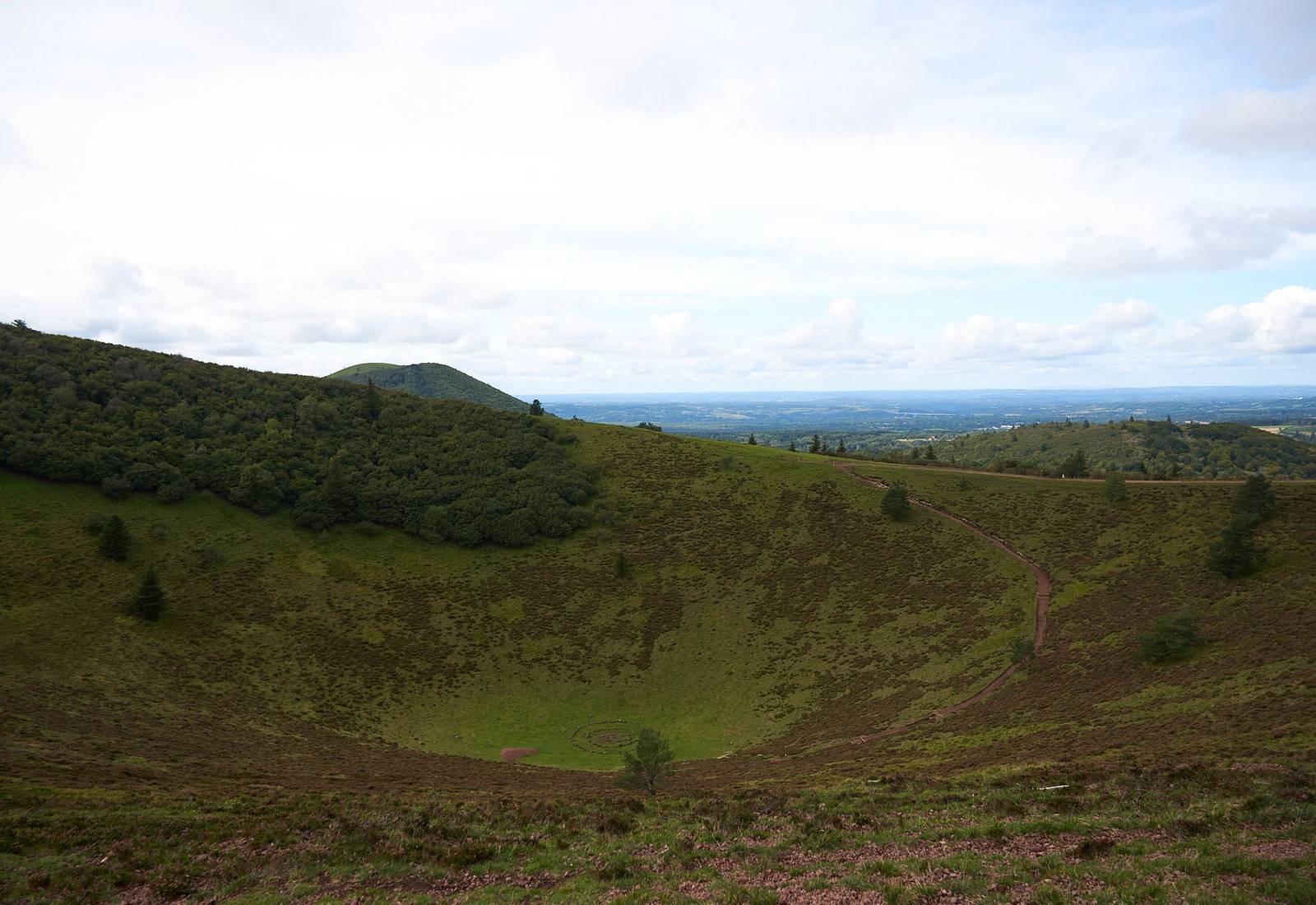
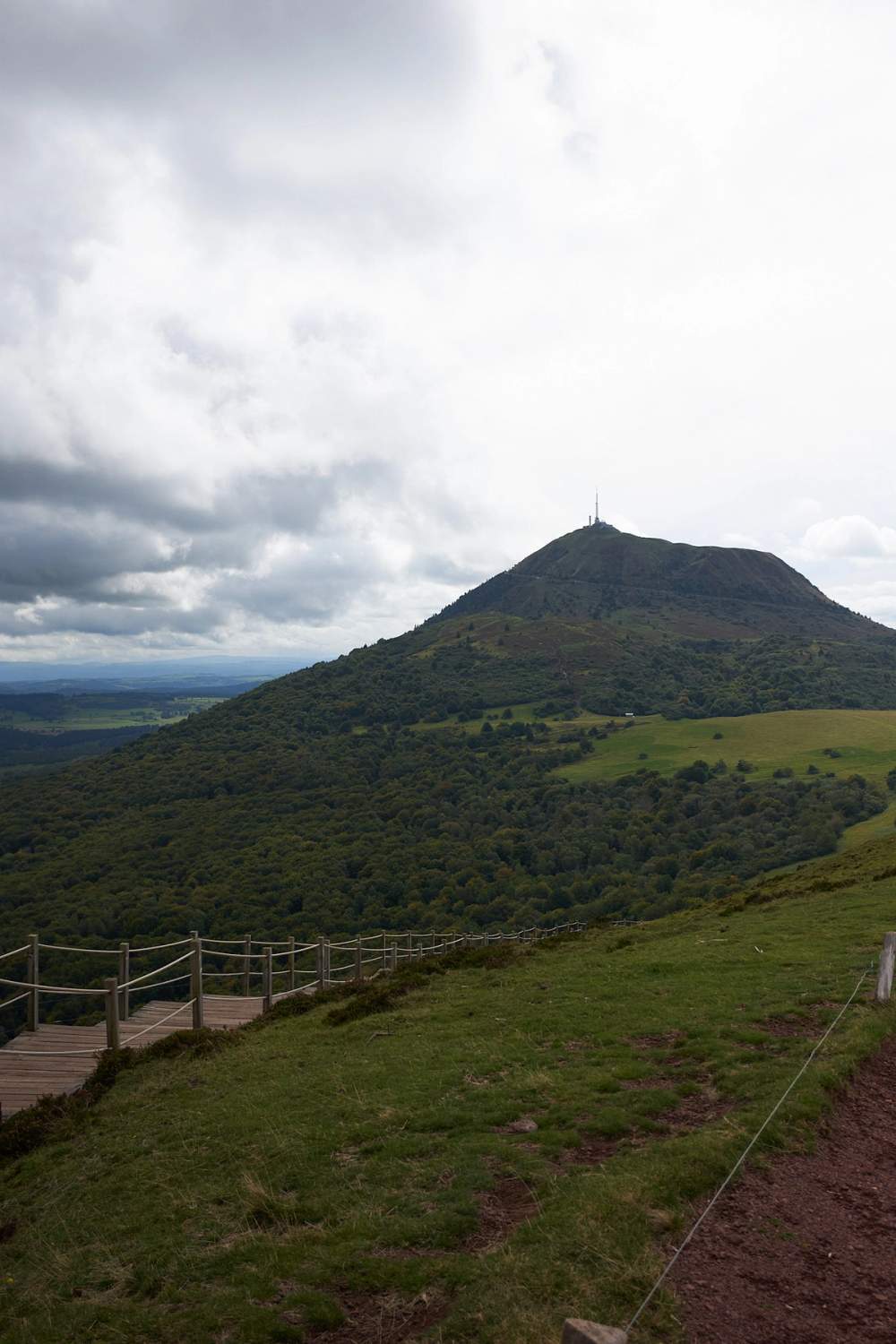
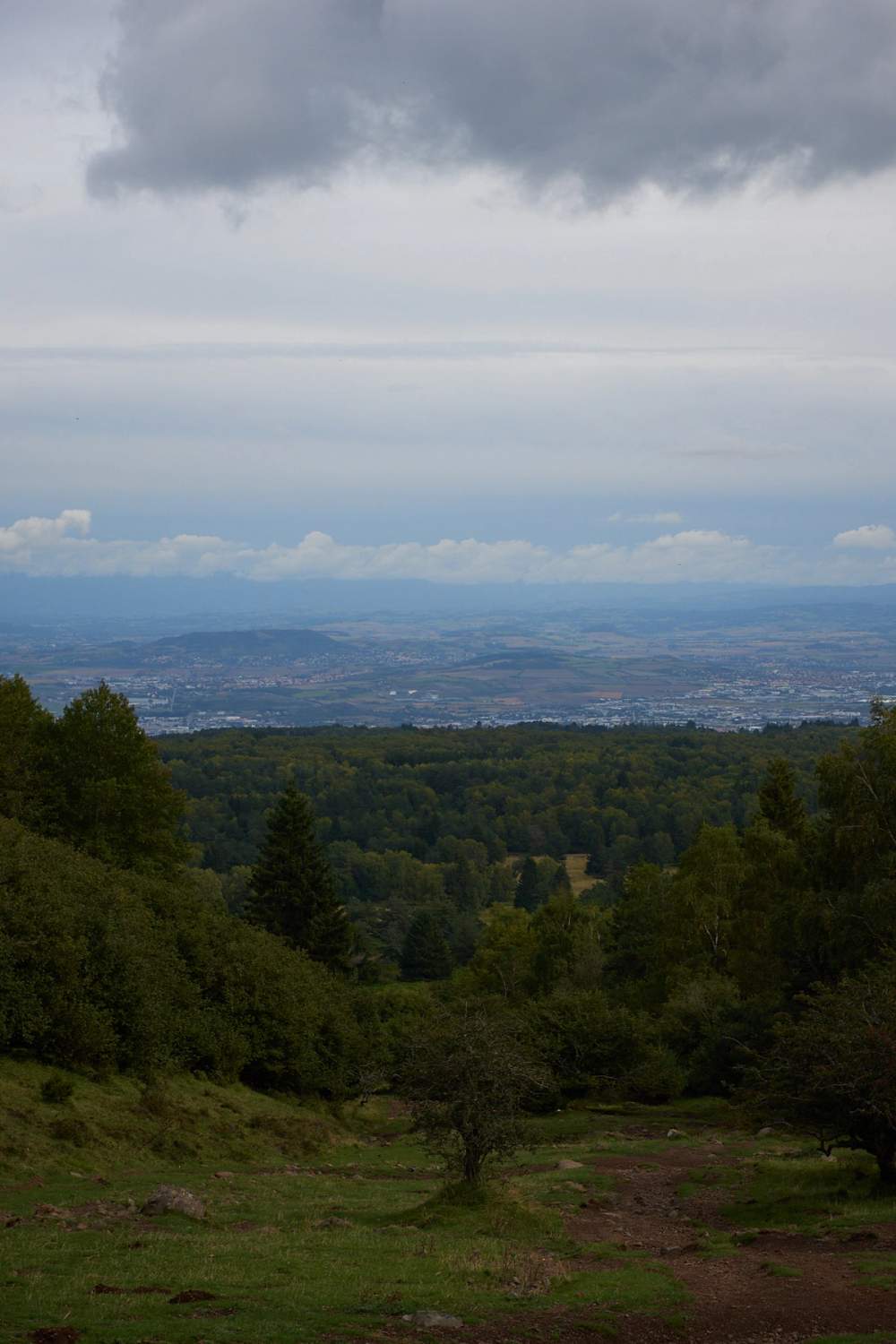
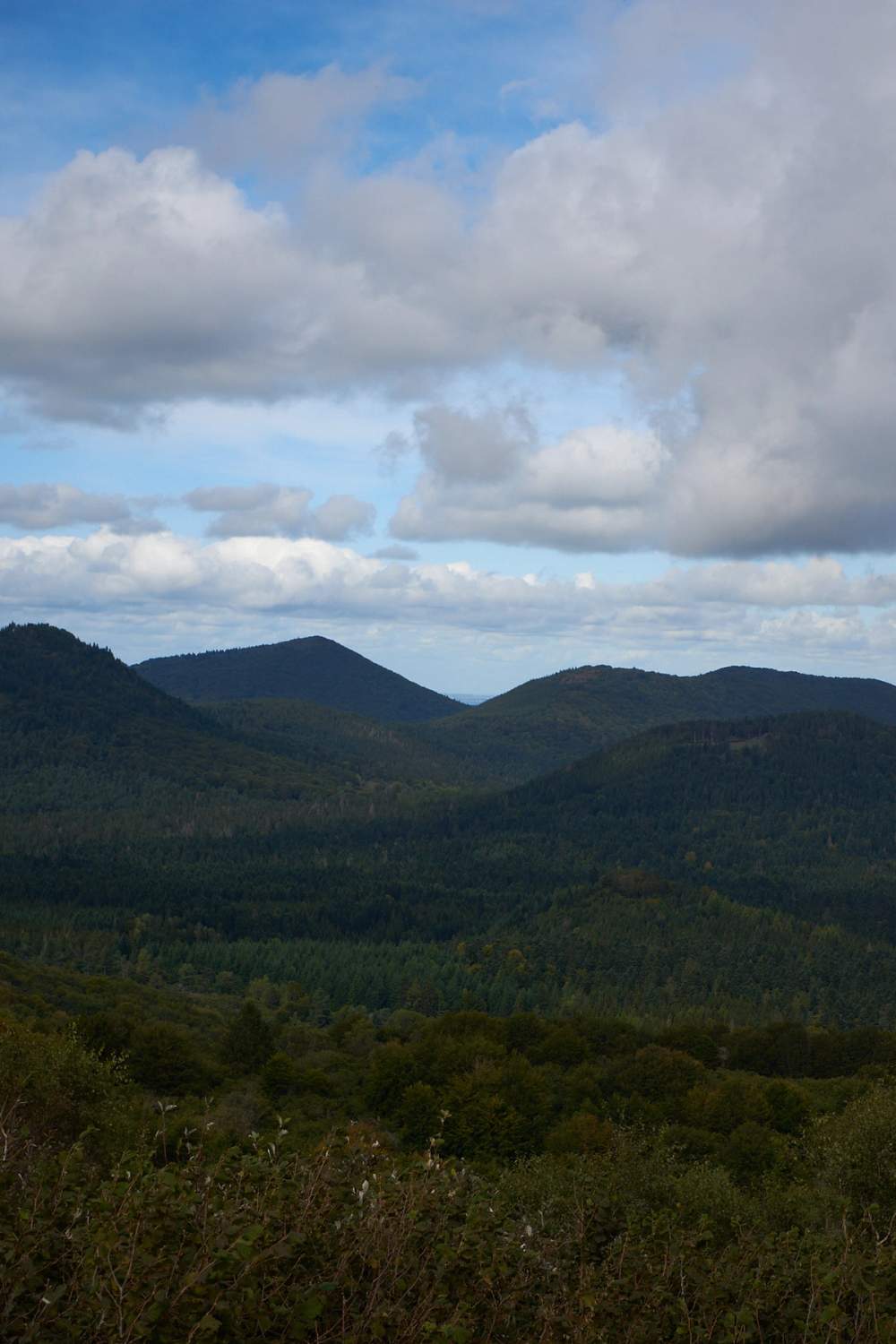
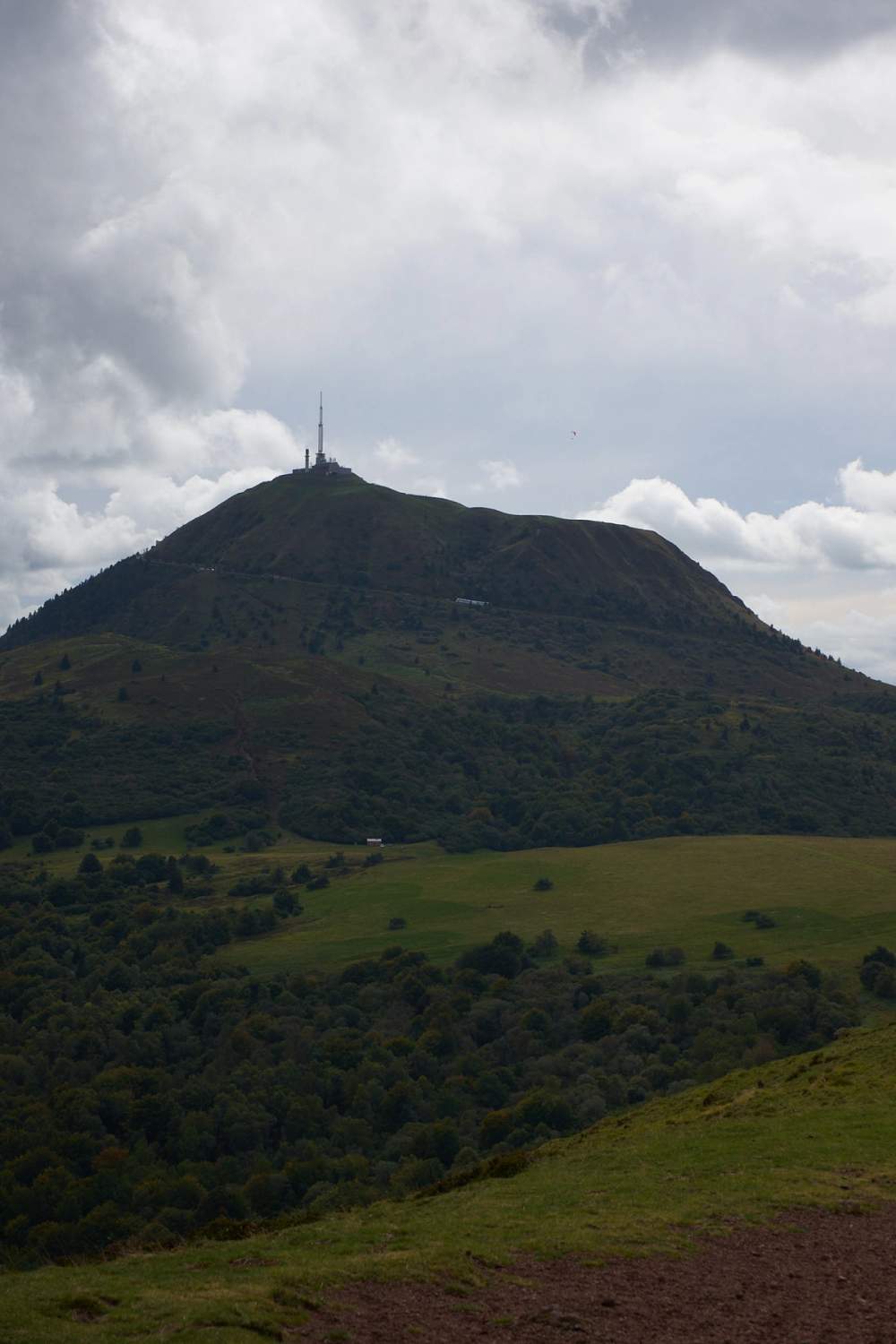
Puy de Pariou rises among the rounded volcanoes of the Chaîne des Puys in central France. The Puy de Pariou hike moves from sheltered woodland to its deep circular crater, making it one of the clearest ways to explore the Auvergne Volcanoes Regional Nature Park. Yet this is not a remote mountain expedition: a manageable loop brings you through the forest and up to the crater rim in a few hours.
During our visit, we parked our camper at the Col des Goules car park and followed the Puy de Pariou loop on AllTrails. The combination worked well for a day hike. However, you need a different place for the night because the trail car park is strictly for daytime use.
Why hike Puy de Pariou?
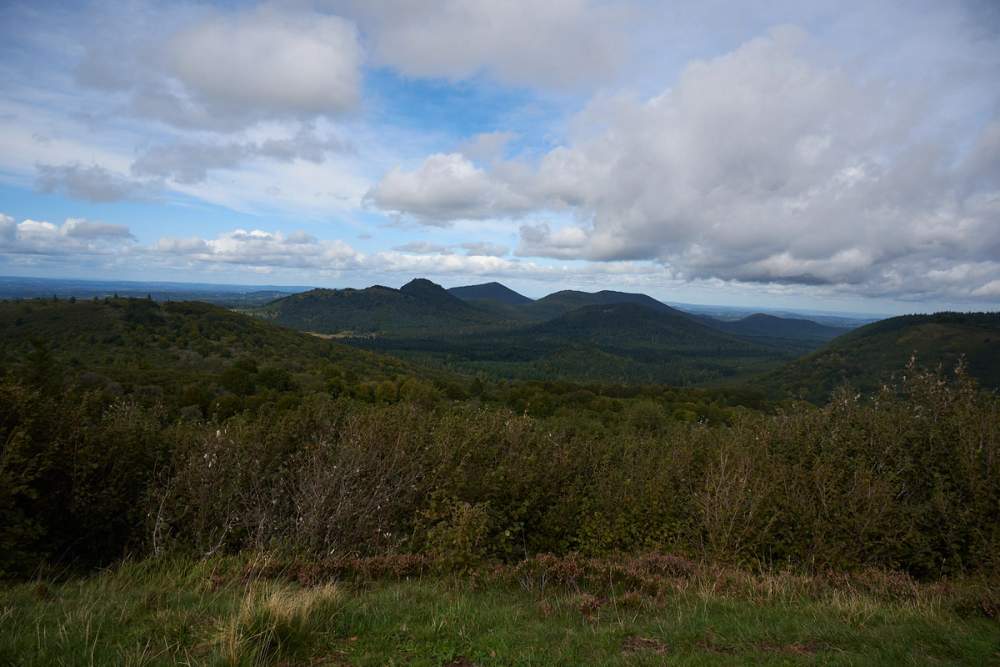
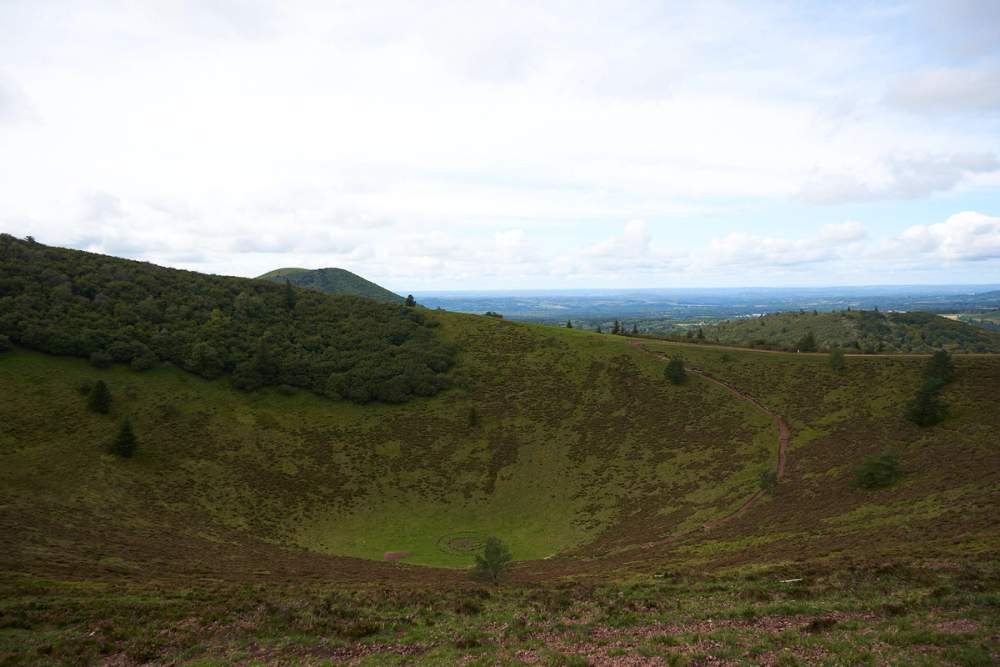
Puy de Pariou is a Strombolian cone with one of the best-preserved craters in the Chaîne des Puys. The wider volcanic landscape is part of the UNESCO-listed Chaîne des Puys–Limagne fault area, so the walk offers more than a pleasant view: it shows clearly how varied volcanic landforms can be.
Although the cone looks wonderfully regular from a distance, its soil is fragile. The old path into the crater was closed to help the vegetation recover and reduce erosion. Therefore, enjoy the view from the rim, stay on the marked route and do not descend into the crater. This small restriction protects the very shape that makes Puy de Pariou so special.
The Puy de Pariou hike we followed
The AllTrails route we walked is a 5.8-kilometre loop with 234 metres of elevation gain. AllTrails rates it as moderate and estimates two to two and a half hours. Nevertheless, allow some extra time if you want to pause at the rim, take photographs or simply enjoy the wider view across the volcanic hills.
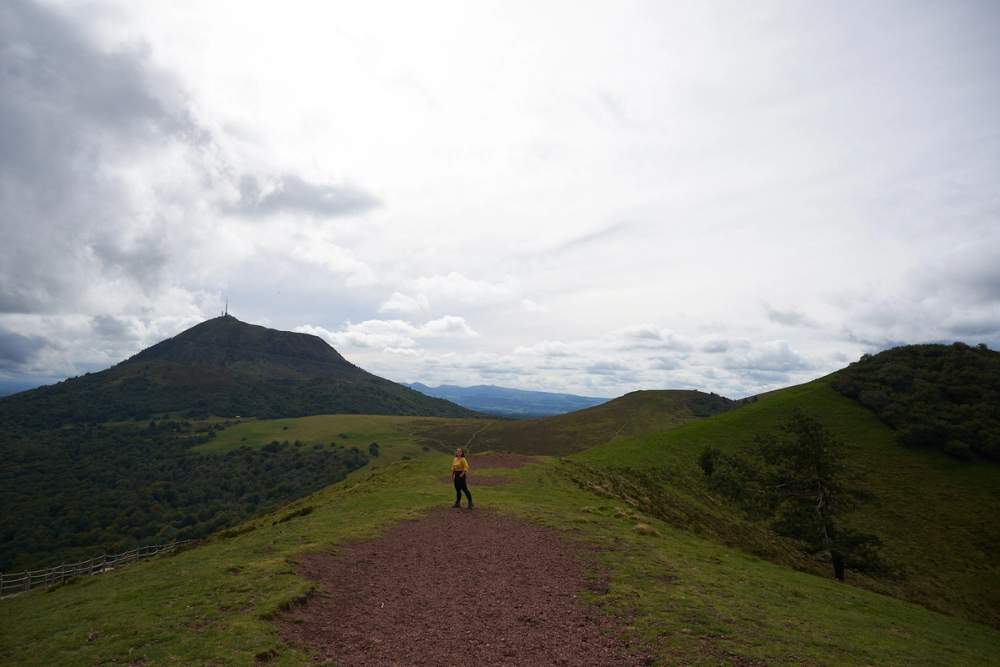
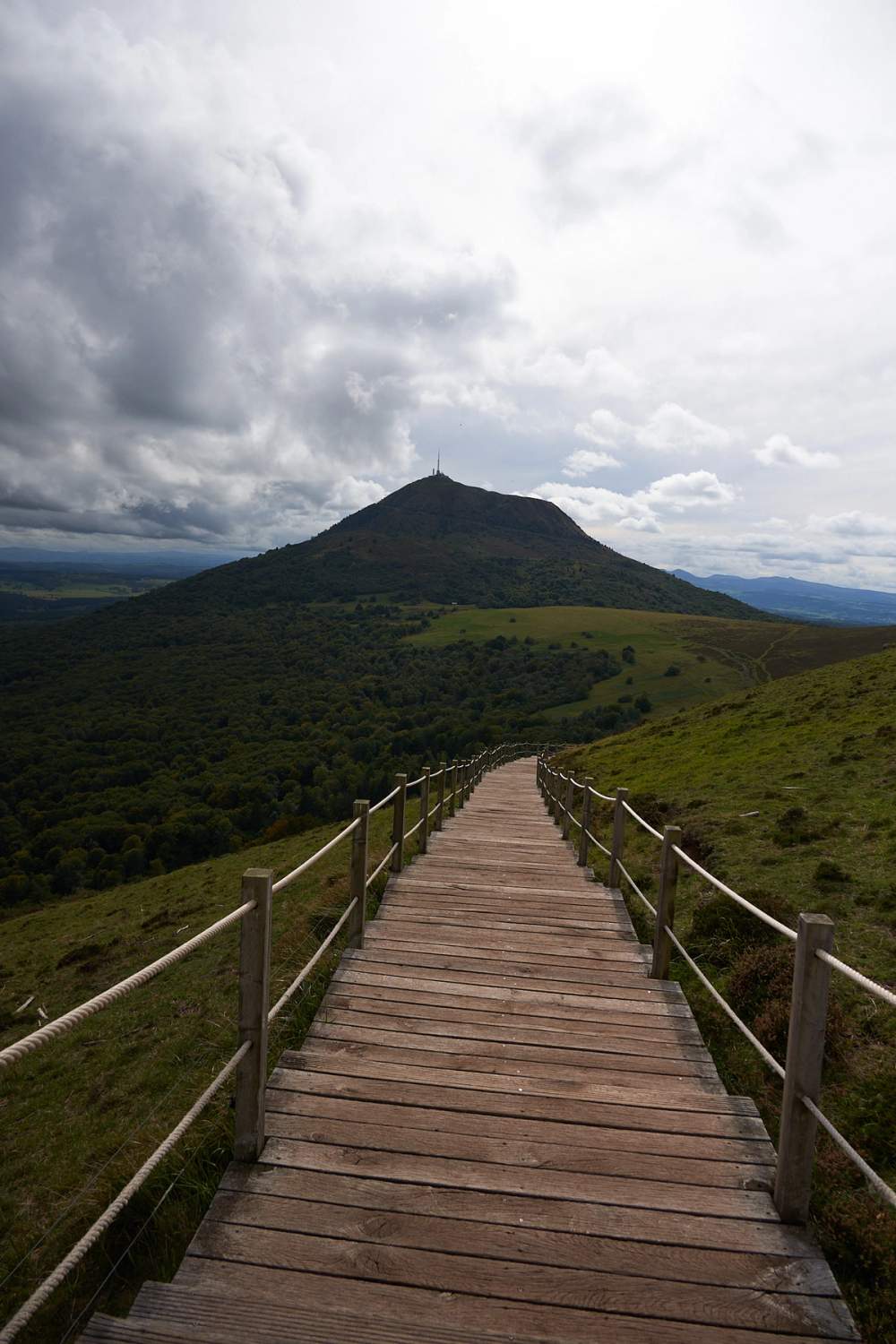
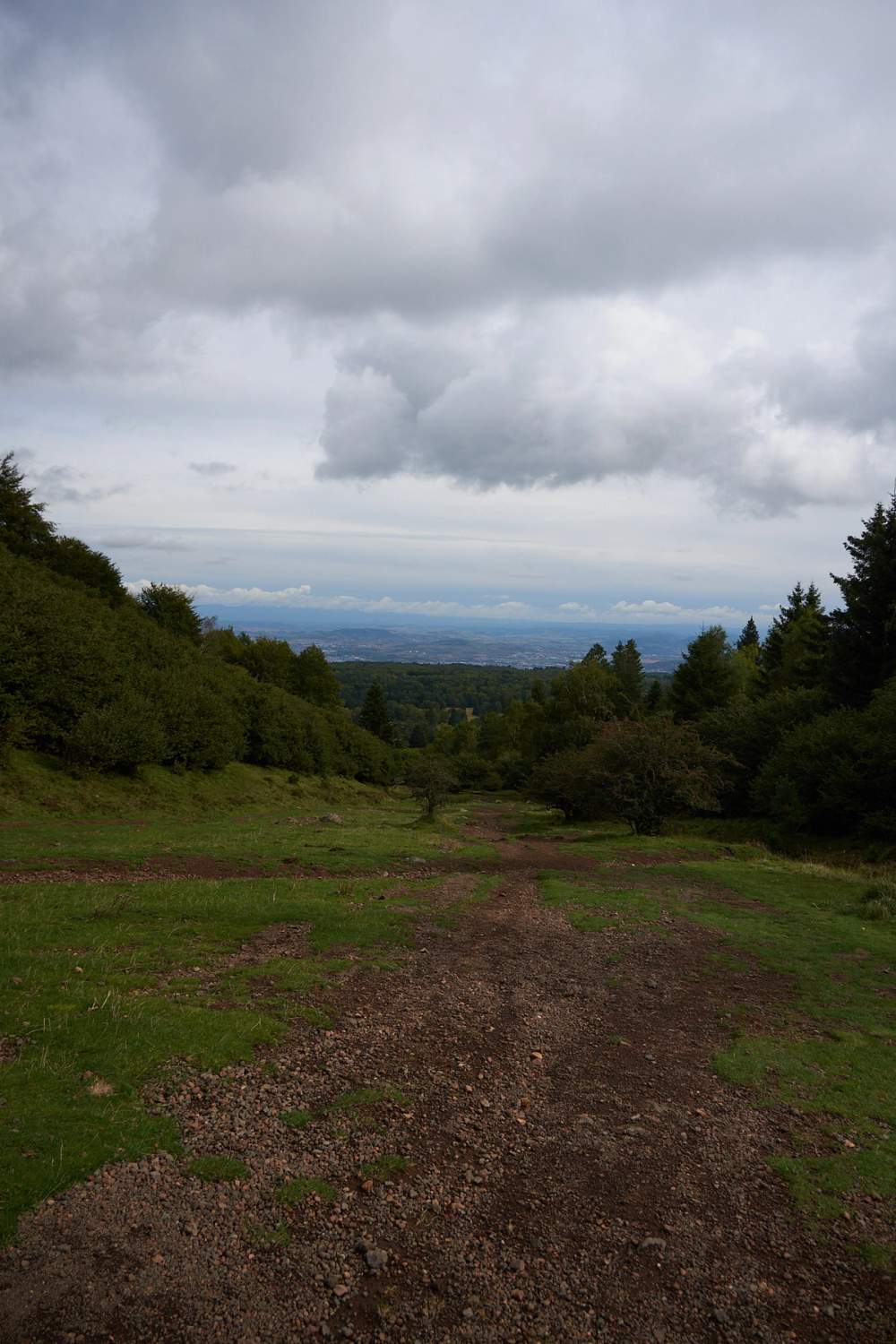
The route starts near the Col des Goules parking area and soon enters woodland. After the quieter forest section, the main climb takes you towards the cone and the wooden steps leading up its side. Consequently, the final ascent feels steeper than the distance alone might suggest, even though the complete walk remains quite manageable for regular hikers.
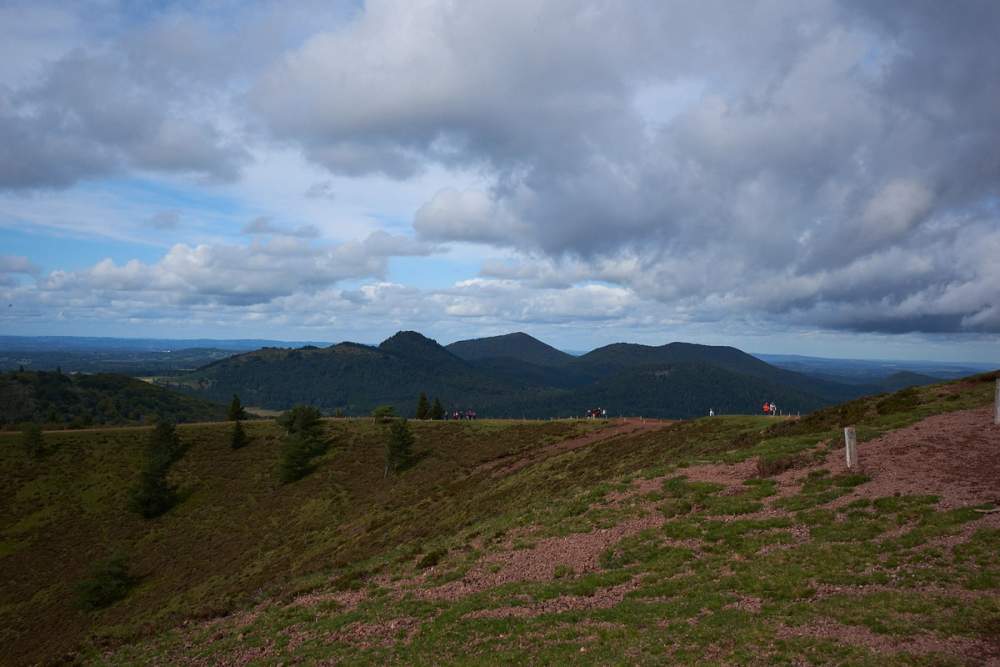
At the top, the crater becomes the clear centre of the walk. Meanwhile, Puy de Dôme stands prominently in the surrounding landscape and gives you a useful sense of scale. The route then loops back towards the forest and the same parking area, so there is no need to arrange transport at the other end.
The path is popular and can become busy, especially in fine weather. Therefore, an early start is a good idea if you prefer a calmer walk and an easier choice of parking spaces. Conditions can also change quickly on an exposed volcanic ridge, so check the forecast and download the route before leaving the camper.
What to bring on the hike
You do not need technical mountain equipment for this Puy de Pariou hike. However, a few practical items make it much more comfortable:
- Walking shoes with grip: Forest soil, loose volcanic material and wooden steps can become slippery after rain.
- Water: There is no reliable place to refill along the loop, so carry enough for the weather and your pace.
- A windproof layer: Although the lower path is sheltered by trees, the crater rim is much more exposed.
- Sun protection: Bring sunscreen, sunglasses and perhaps a cap because the upper section has little shade.
- An offline map: Mobile reception may not always be dependable; therefore, save the AllTrails route in advance.
- A compact snack: The cacao, hazelnut and date balls from our blog need only three ingredients and are easy to pack without taking up much space.
In addition, take all wrappers and food waste back to the camper. The protected volcanic soil is vulnerable, and staying on the path matters even when a shortcut looks harmless.
Day parking at the start of the walk
We used the Park4night spot on the D941 at Col des Goules. It is a practical starting point for several walks and has a waste bin, but it is not an overnight camper stop. The current listing marks it as daytime parking only and gives opening hours of 07:00 to 22:00.
Because this is a shared hiking car park rather than a camper area, it is best to arrive with everything you need. There is no water, electricity or waste-water service listed. Most importantly, leave after the hike and move to a legal overnight place instead of treating the closing time as a suggestion.
Where to stay overnight with a camper
One option is the paying motorhome area in Orcines, at 62–64 Route de Limoges. Park4night currently lists 51 spaces on mostly flat tarmac, with drinking water, black- and grey-water disposal, waste bins and possible electricity. Moreover, it is open throughout the year and is well placed for exploring the volcanic area.
The listing currently shows parking at €7 outside high season and €9 in high season, while water and electricity cost extra. Still, prices and payment systems can change, so check the latest information before arrival. This is a functional motorhome area rather than a scenic campsite, yet that can be exactly what you need after a day on the trail.
Another option is the paying motorhome area beside Vulcania in Saint-Ours. It offers drinking water, black- and grey-water disposal and possible electricity. However, recent visitor reports mention that some pitches slope, so levelling ramps are useful. The payment setup and overnight price have also varied; therefore, read the current signs and the newest Park4night comments when you arrive.
A short visit to Vulcania
Vulcania is easy to combine with an overnight stop beside the park, especially if you are travelling with children or want more background after seeing the volcanoes outdoors. The 57-hectare discovery park focuses on volcanoes, natural phenomena and Earth in space, using exhibitions and attractions to explain the science.
Nevertheless, keep Puy de Pariou as the main event if your trip is about walking. Vulcania works best as a separate half- or full-day activity, and its opening days and hours vary through the season. Check the official Vulcania visitor information before planning your day.
More walks in the Auvergne volcanoes
If you want a longer challenge, consider the Puy de Dôme–Puy Pariou Loop. It covers 13.5 kilometres with 601 metres of climbing and takes roughly four and a half to five hours, so it turns the outing into a proper hiking day.
For even more choice, browse the AllTrails overview for the Auvergne Volcanoes Regional Nature Park. It is a useful starting point for finding walks elsewhere in this large volcanic region.
Is the Puy de Pariou hike worth it?
For us, Puy de Pariou was a very good campervan road-trip stop because the walk fits comfortably into part of a day without feeling insignificant. The route is short enough for many regular walkers, yet the climb, crater rim and neighbouring volcanic shapes give it a clear character. However, it is not the place to seek solitude at peak times, and respecting the closed crater path is essential.
Afterwards, you can continue south through the same regional nature park to hike the Gorges du Pas de Cère in the Cantal, where a woodland gorge and waterfall create a very different landscape. Alternatively, head towards Lozère for the gentler loop around Lac de Charpal. Together, these stories make useful next stops for a campervan route through central France.